Owning rental property in Missouri can be a strong long-term investment, but the rules that govern the landlord-tenant relationship are not optional. Every year, well-meaning landlords across Joplin, Springfield, and the rest of the state lose money or end up in court because of an avoidable mistake — locking out a tenant, withholding a deposit the wrong way, or using a lease clause that won't hold up in front of a judge.
This guide walks through exactly what a landlord cannot do in Missouri under current state law. It's written for property owners who want to stay compliant, protect their investment, and avoid the kind of disputes that drain time and rental income. Understanding Missouri landlord laws isn't just about avoiding lawsuits — it's about building a rental business that runs cleanly year after year.
A quick note before we dive in: the information below summarizes how landlord tenant law in Missouri generally works under Chapter 441 and Chapter 535 of the Revised Statutes of Missouri (RSMo). It is not legal advice, and specific situations should be reviewed with a qualified Missouri attorney.
1. A Landlord Cannot Forcibly Remove a Tenant
This is the single most expensive mistake landlords make. In Missouri, "self-help eviction" is illegal. No matter how badly a tenant has breached the lease, the landlord cannot:
- Change the locks
- Shut off the electricity, gas, or water
- Remove the tenant's belongings or set them on the curb
- Use threats or intimidation to force a tenant to leave
The only legal way to remove a tenant in Missouri is through a court order. That typically means filing a Rent and Possession action (for nonpayment) or an Unlawful Detainer action (for other lease violations) in the appropriate county court — for Joplin landlords, that's Jasper County or Newton County depending on the property's location. The sheriff, not the landlord, executes the removal.
Violating this rule can expose a landlord to actual damages, punitive damages, and the tenant's attorney fees.
2. A Landlord Cannot Discriminate Against Protected Classes
Both federal law (the Fair Housing Act) and the Missouri Human Rights Act prohibit discrimination in rental housing based on:
- Race or color
- National origin
- Religion
- Sex
- Familial status (households with children)
- Disability
- Ancestry
This applies to advertising, screening, application decisions, lease terms, and how tenants are treated during their tenancy. A landlord cannot, for example, refuse to rent to a family with children, advertise "no kids," or charge a disabled tenant a higher deposit because of an assistance animal.
Note that some Missouri cities, including Kansas City and St. Louis, have additional local protections (such as source of income). Always check local ordinances where your property sits.
3. A Landlord Cannot Mishandle the Security Deposit
Missouri's security deposit rules are strict and well-defined under RSMo 535.300. A landlord in Missouri cannot:
- Collect more than two months' rent as a security deposit
- Hold the deposit beyond 30 days after the tenancy ends without returning it or providing an itemized list of deductions
- Deduct for ordinary wear and tear (faded paint, minor carpet wear, normal scuffs)
- Conduct the move-out inspection without giving the tenant reasonable written notice of the date and time — the tenant has the right to be present
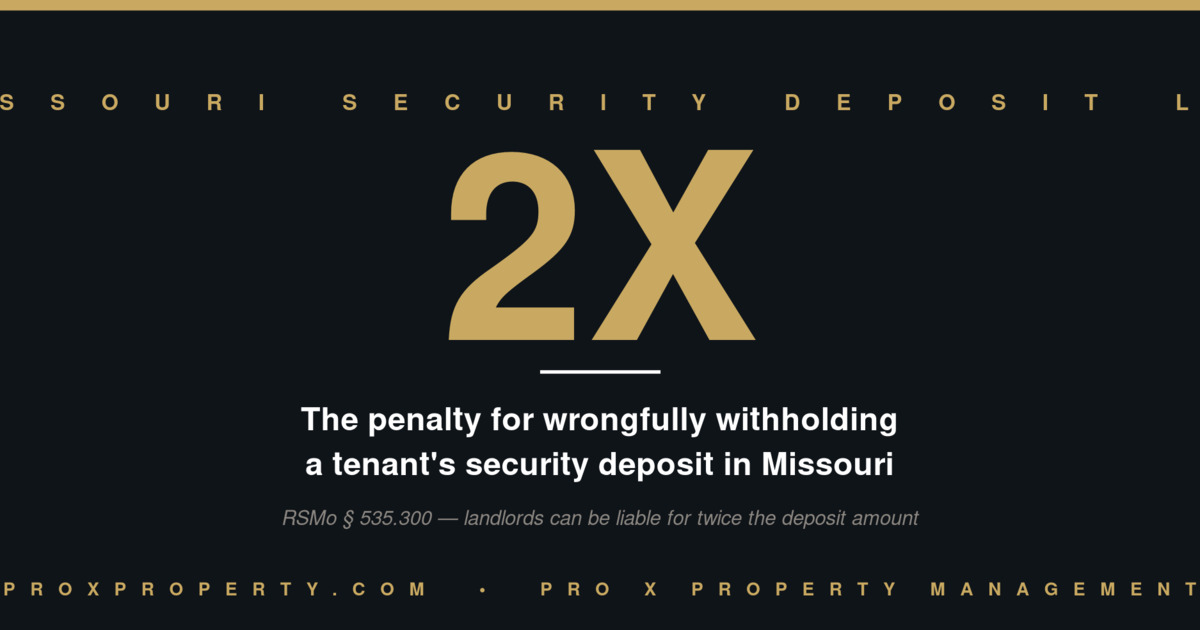
If a landlord wrongfully withholds a deposit, the tenant can recover up to twice the amount wrongfully withheld, plus court costs.
For a deeper walkthrough of how to handle deposits correctly, see our companion guide on Missouri security deposit law.
4. A Landlord Cannot Enter the Property Unreasonably
Missouri does not have a specific statutory notice period for landlord entry, which surprises many out-of-state owners. That does not mean a landlord can walk in whenever they want. Most well-drafted leases include a 24-hour notice clause, and courts generally expect landlords to:
- Provide reasonable notice (24 hours is the practical standard)
- Enter at reasonable times (typically business hours)
- Have a legitimate purpose (repairs, inspections, showings)
- Avoid entering repeatedly in a way that could be considered harassment
Emergencies (a burst pipe, a fire, a suspected gas leak) are the obvious exception — a landlord can enter immediately to address them.
5. A Landlord Cannot Ignore Habitability
Missouri recognizes an implied warranty of habitability, meaning every rental must meet basic livability standards. Landlords cannot rent out a unit that fails to provide:
- Working plumbing and a safe water supply
- Functional heating
- Working electrical systems
- A structurally sound building (roof, walls, floors)
- Compliance with local housing and safety codes
In Joplin specifically, the city's property maintenance code applies on top of state requirements. Ignoring repair requests doesn't just damage the relationship with your tenant — it can give the tenant grounds to terminate the lease, repair and deduct (in some circumstances), or escalate to code enforcement.
6. A Landlord Cannot Skip the Eviction Process
Even with valid grounds to evict, the landlord cannot shortcut the legal process. Missouri requires the correct notice and the correct court filing depending on the situation:
- Nonpayment of rent: The landlord can file a Rent and Possession action under RSMo Chapter 535. A demand for rent is typically made before filing.
- Lease violations or holdover tenants: Generally proceeds as an Unlawful Detainer action under Chapter 534.
- Month-to-month termination: Requires one full month's written notice.
Skipping these steps — or trying to "speed things up" by intimidating a tenant out — will get a case dismissed and can expose the landlord to counter-claims.
7. A Landlord Cannot Retaliate Against a Tenant
Missouri's retaliation protections are narrower than some states, but landlords still cannot punish a tenant for:
- Reporting code violations to local authorities
- Requesting legally required repairs
- Joining or organizing a tenants' association
- Exercising rights granted under the lease or state law
Retaliatory rent hikes, sudden lease non-renewals after a complaint, or selective enforcement of lease terms can all expose a landlord to liability.
8. A Landlord Cannot Enforce Illegal Lease Clauses
Just because a clause is written into a lease does not mean it's enforceable. Missouri courts will not uphold provisions that:
- Waive the tenant's right to a habitable dwelling
- Allow the landlord to enter without any notice
- Permit lockouts or utility shutoffs as remedies
- Waive the tenant's right to sue or to a jury trial in all circumstances
- Charge unconscionable late fees or penalty rent
A lease packed with unenforceable clauses doesn't protect a landlord — it usually creates more risk, not less.
FAQs About Missouri Landlord Laws
Can a Missouri landlord raise the rent during a lease term? No. Rent cannot be raised mid-lease unless the lease itself allows it. For month-to-month tenancies, the landlord must give at least one full month's written notice before a rent increase takes effect.
Are there rent control laws in Missouri? No. Missouri does not have statewide rent control, and state law preempts most local rent control efforts.
Can a landlord refuse to renew a lease in Missouri? Generally yes, as long as the refusal is not based on a protected class or in retaliation for the tenant exercising a legal right. Proper notice is still required to end a month-to-month or expiring fixed-term tenancy.
Does Missouri require a written lease? Not for tenancies of one year or less. However, written leases are strongly recommended — they prevent disputes and make enforcement far easier.
What are the most common reasons landlords get sued in Missouri? Improper security deposit handling, illegal lockouts, and habitability complaints lead the list. All three are avoidable with the right processes in place.
Stay Compliant — and Profitable — With a Local Partner
The cost of getting any of these rules wrong almost always exceeds the cost of doing it right the first time. Working with a professional property manager who understands Missouri renter rights and operates day-to-day in the local courts is one of the simplest ways to protect your investment.
At Pro X Property Management, we handle the compliance side — lease drafting, deposit handling, notices, inspections, and the eviction process when it becomes necessary — so Joplin-area landlords can stay focused on growing their portfolios instead of navigating statute books. Need help managing tenants and staying compliant with Missouri rental laws?
Learn more about our Joplin property management services, or contact Pro X Property Management for a free rental analysis on your property.
